Low-Slope Systems Built for Heat and Water
Flat Roof Systems in Tucson for commercial buildings, modern homes, and properties requiring pooling water management
Low-slope and flat roofs dominate commercial construction and appear increasingly on modern residential designs, but these systems face unique challenges in southern Arizona where intense sun degrades roofing membranes and sudden monsoon rainfall tests drainage capacity. Desert Storm Roofing installs flat roof systems in Tucson, Casa Grande, Bisbee, and surrounding areas using materials engineered to resist UV damage and handle the ponding water that occurs when drains clog or roof sections settle unevenly. Flat roofs require different installation approaches than sloped systems because water does not shed rapidly and membrane seams must remain sealed under constant exposure.
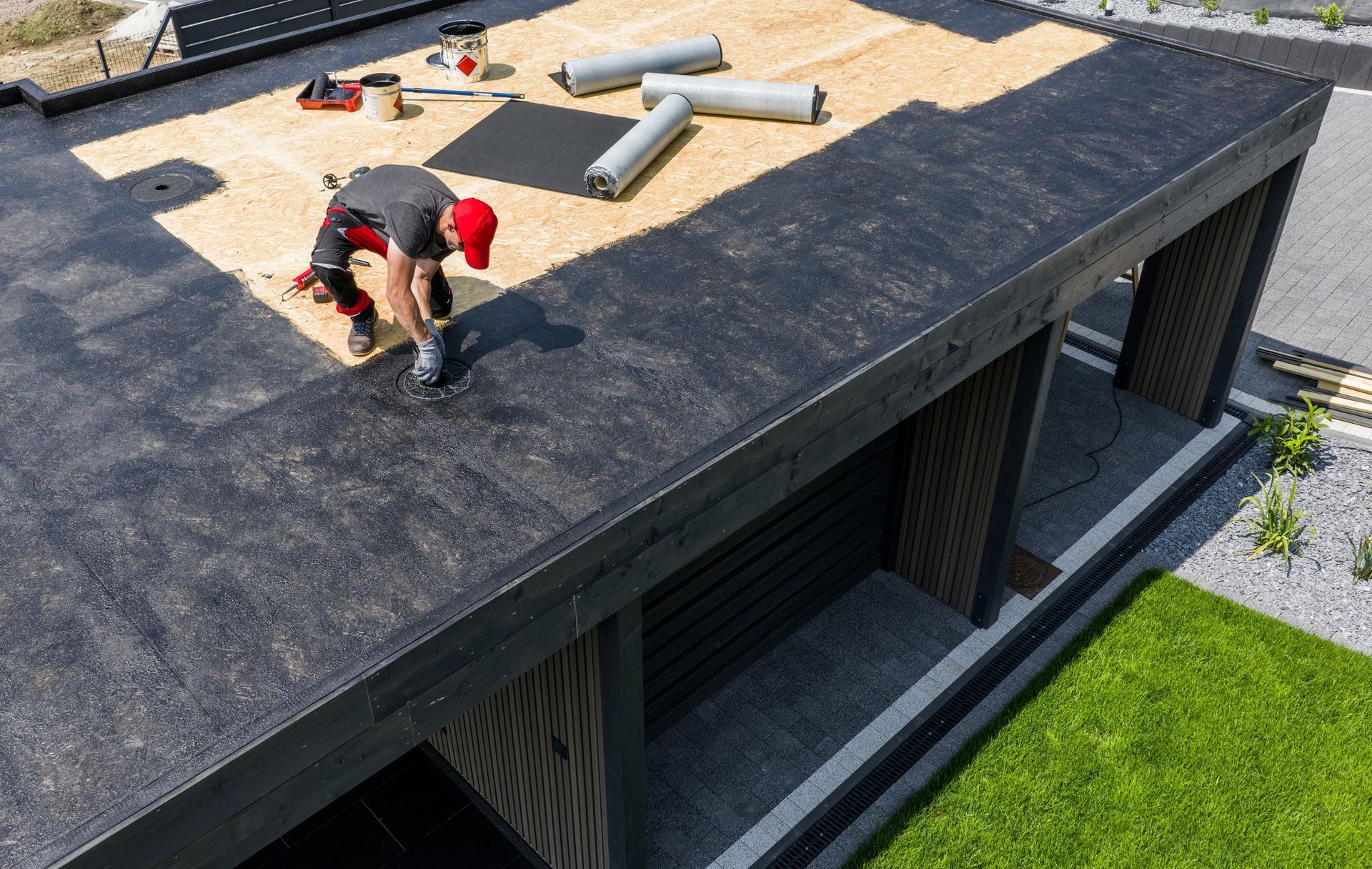
Flat roof installation involves preparing the roof deck, applying insulation layers that provide thermal resistance and create positive drainage slopes, and installing membrane systems that bond or mechanically attach to the substrate. Seams are heat-welded or chemically bonded depending on membrane type, and all penetrations for HVAC equipment, drains, and roof access receive custom flashing that prevents water intrusion at these vulnerable transition points. Proper slope design ensures water flows to drains rather than pooling in low spots where standing water accelerates membrane deterioration.
Schedule a flat roof evaluation to assess current system condition and receive recommendations for repair, coating, or replacement based on membrane age and performance.
What Flat Roof Systems Must Handle in Desert Climates
Flat roof membranes in Tucson endure surface temperatures exceeding 170 degrees during summer, which causes thermal expansion that stresses seams and fasteners while degrading plasticizers that keep membranes flexible. Materials suited for these conditions include TPO and PVC membranes with heat-welded seams that form bonds stronger than the membrane itself, and modified bitumen systems that layer reinforced sheets with hot-applied asphalt or cold adhesives. Reflective coatings applied over existing membranes reduce surface temperatures by reflecting solar radiation, which extends membrane life and reduces cooling costs for conditioned spaces below.
After installation, properly designed flat roofs drain completely within 48 hours of rainfall and show no membrane bubbling or seam separation under thermal stress. You will notice that interior spaces stay cooler when reflective membranes reduce heat transfer through roof assemblies, and that ponding water no longer appears in the same locations after every storm. Desert Storm Roofing designs drainage systems that account for monsoon rainfall intensity, which can deliver an inch of rain in 30 minutes and overwhelm undersized drains or gutters.
Flat roof maintenance involves periodic inspections to clear drains of debris, check seam integrity, and apply localized repairs before small membrane punctures expand into leaks. Coating systems can be reapplied every several years to extend membrane service life without full replacement, making flat roofs economical to maintain when addressed proactively.
Frequently Asked Questions About Flat Roofing
Property owners managing commercial buildings or modern homes with flat roofs need to understand material options, drainage requirements, and maintenance expectations specific to low-slope systems.
What causes flat roofs to leak more than sloped roofs?
Flat roofs rely entirely on membrane integrity and seam quality rather than gravity-driven water shedding, so any puncture, seam failure, or flashing gap allows direct water entry instead of channeling moisture down slope planes.
How do you prevent water from pooling on flat roofs?
Proper slope design built into insulation layers directs water toward drains and scuppers, while tapered insulation systems create positive drainage on roof decks that have settled or were installed without adequate pitch.
Which flat roof material works best in Arizona heat?
TPO and PVC membranes with white or light-colored surfaces reflect the most solar radiation and remain flexible under extreme temperatures, while modified bitumen systems with reflective cap sheets also perform well when properly maintained.
Can flat roofs be coated instead of replaced?
Yes, elastomeric or silicone coatings applied over sound existing membranes restore waterproofing and add reflectivity that extends system life, though coatings only work when underlying membranes remain structurally intact without widespread cracking or delamination.
How often should flat roofs in Nogales or Sierra Vista be inspected?
Semi-annual inspections before and after monsoon season catch drainage problems and membrane damage early, while post-storm inspections identify wind-blown debris impact and seam stress from rapid temperature changes during weather events.
Desert Storm Roofing evaluates flat roof systems to determine whether coating, repair, or replacement provides the best value based on current condition and remaining service life. Contact us to arrange an evaluation and receive system recommendations suited to your building type and performance requirements.